Chikankari, the delicate hand embroidery tradition of Lucknow, is far more than a decorative textile craft. It is a living heritage that weaves together aesthetics, culture, and socio-economic transformation—especially in the lives of women artisans and rural communities surrounding the city.
1. Aesthetic Excellence: The Poetry of Needle and Thread
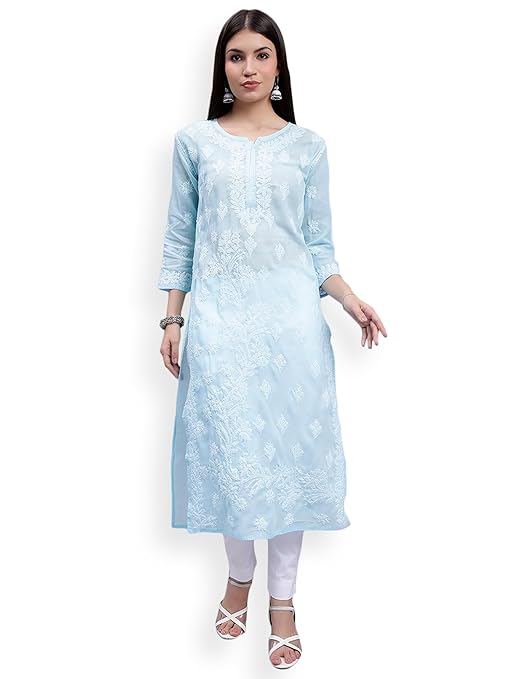
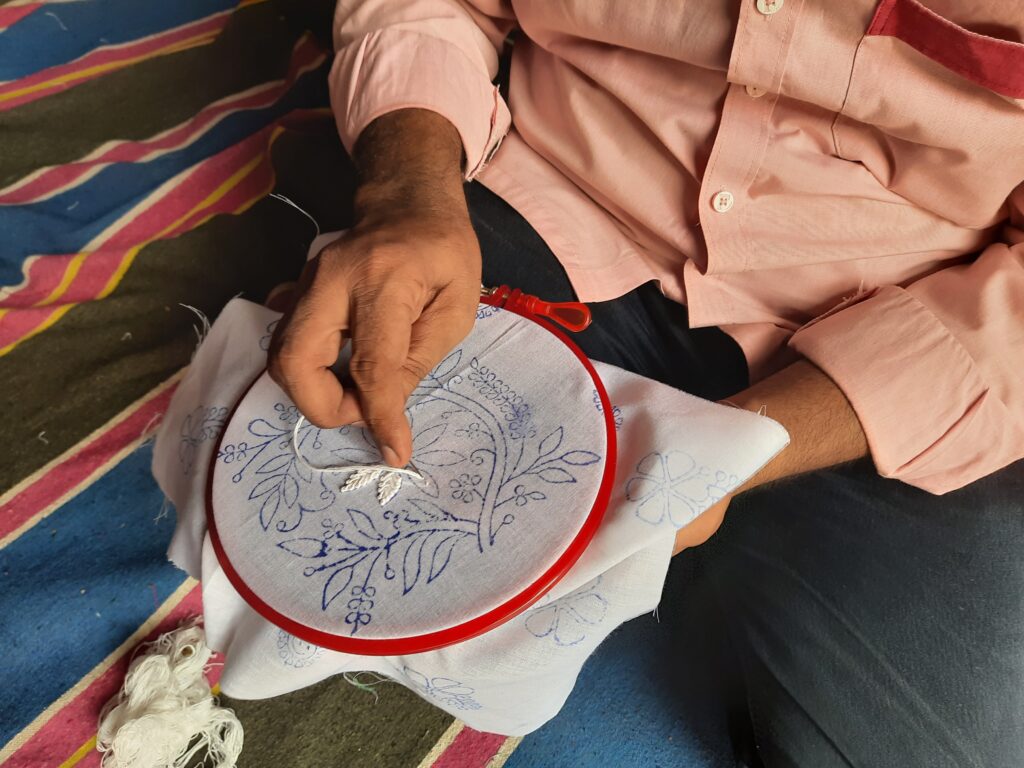
Chikankari is often described as “wearable poetry.” Its aesthetic lies in subtlety—traditionally white thread on soft fabrics like muslin, creating an ethereal play of light and shadow. The craft employs up to 30–40 intricate stitches such as bakhiya (shadow work), phanda, murri, and jaali, each contributing to texture and depth.
Unlike loud, surface-heavy embellishments, chikankari embodies minimalism and refinement. Over time, it has evolved aesthetically—now seen on silk, chiffon, and organza, and even in contemporary colored palettes—making it relevant in both traditional and global fashion contexts.
This aesthetic versatility has allowed designers and brands to reinterpret the craft, positioning it within luxury fashion as well as everyday wear.
2. Cultural Significance: A Living Heritage of Awadh
Rooted in the cultural ethos of Awadh and often linked to Mughal patronage, chikankari is an inseparable part of Lucknow’s identity. It carries a Geographical Indication (GI) tag, ensuring authenticity and protecting its heritage value.
The motifs—floral vines, paisleys, jaali patterns—reflect Indo-Persian artistic influences and architectural inspirations. More importantly, the craft is not just preserved in museums but lives through generations of artisans who pass down skills orally and through practice.
Chikankari is thus a cultural narrative stitched into fabric—telling stories of tradition, continuity, and identity.
3. Women Empowerment: Silent Strength Behind the Craft
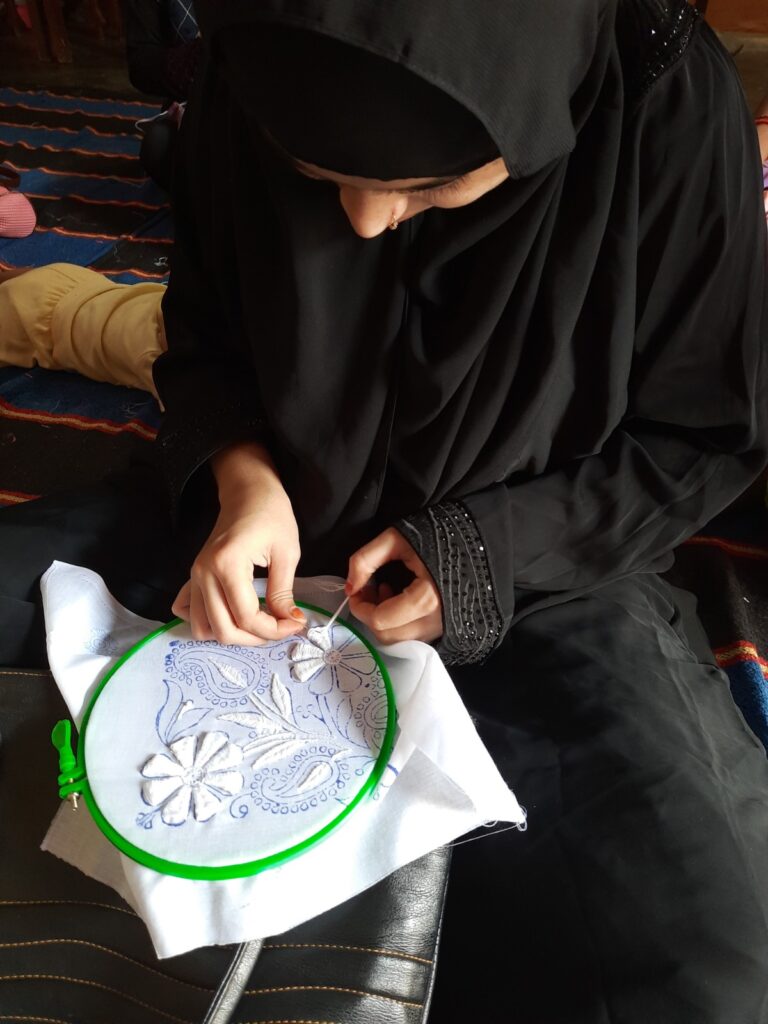
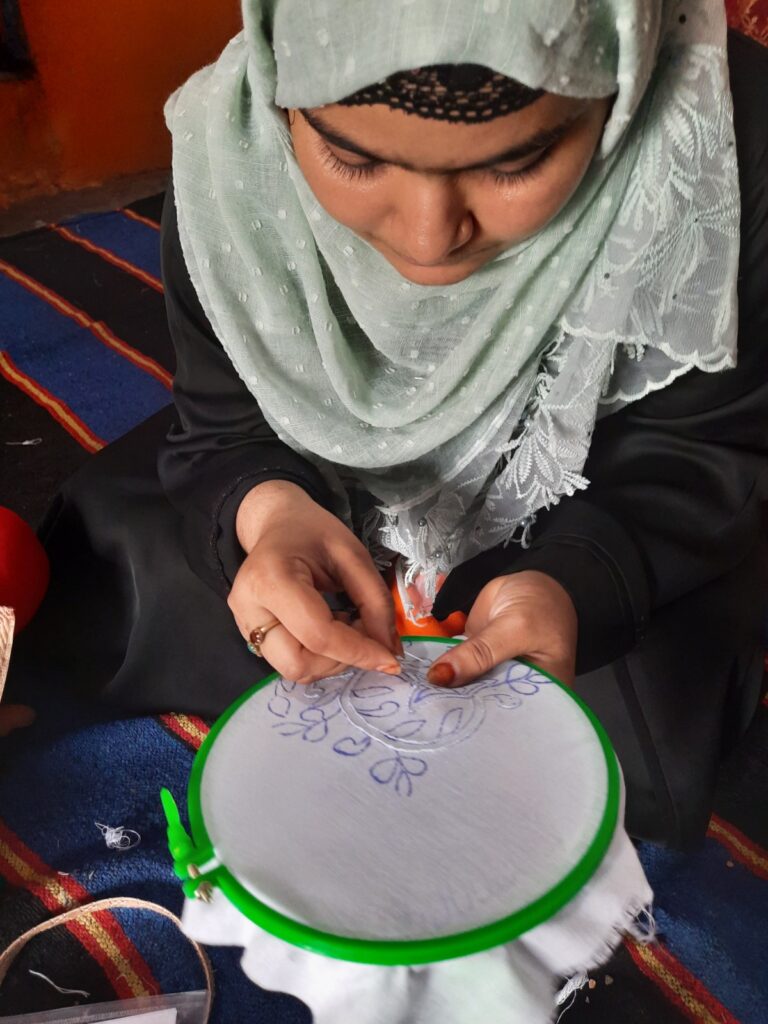
At the heart of chikankari lies a powerful story of women’s empowerment. A majority of the artisans are women, often from economically weaker and marginalized communities.
Key Dimensions of Empowerment:
- Home-based Work Opportunities: Women can work from home, balancing domestic responsibilities with income generation.
- Financial Independence: Even small earnings contribute to household income, giving women a stronger voice in family decision-making.
- Skill-based Identity: Chikankari transforms traditional domestic roles into skilled professional identities.
- Collective Strength: Organizations like SEWA have formed self-help groups, reducing dependence on exploitative middlemen and ensuring fair wages.
For many women, chikankari is the first step toward dignity, recognition, and socio-economic mobility.
4. Artisan Empowerment and Challenges
While the craft empowers, it also reveals structural challenges. Many artisans earn as little as ₹150–200 per day despite spending days on a single piece.
Key Issues:
- Dependence on middlemen
- Lack of direct market access
- Limited awareness of government schemes
- Wage disparity between retail value and artisan earnings
However, recent initiatives—NGOs, cooperatives, digital marketplaces, and government schemes—are gradually improving transparency and income distribution.
Artisan-led enterprises and training programs are also enabling artisans to become entrepreneurs, not just labor providers.
5. Economic Significance: A Craft That Sustains Livelihoods
Chikankari is a major contributor to the regional economy:
- Employs over 1–4.5 lakh artisans directly and indirectly
- Generates thousands of crores annually in domestic and export markets
The craft supports an entire value chain—designers, dyers, printers, traders, and exporters—making it a vital part of India’s handicraft economy.
It also aligns with global trends in sustainable and ethical fashion, as it is handmade, low-energy, and rooted in slow production processes.
6. Rural Transformation: Impact on Villages Around Lucknow
Chikankari is not limited to urban Lucknow—it thrives in surrounding rural districts such as Barabanki, Sitapur, Hardoi, and Kakori.
How it is shaping rural landscapes:
- Employment Generation: Provides livelihood to thousands of rural women without migration.
- Skill Transmission: Craft knowledge is passed across generations, preserving intangible heritage.
- Self-Help Groups & Micro-Entrepreneurship: Women form collectives, access credit, and start small enterprises.
- Economic Inclusion: Rural households gain supplementary income, improving living standards.
This decentralized production model turns villages into active hubs of creative economy rather than passive labor pools.
7. Bridging Tradition and Contemporary Design
Today, chikankari is undergoing a transformation:
- Integration into global fashion and couture
- Experimentation with new fabrics and colors
- Use in lifestyle products beyond apparel
This evolution ensures that the craft is not frozen in time but continues to grow with changing consumer tastes while retaining its essence.
Conclusion
Chikankari of Lucknow stands at a unique intersection of beauty, culture, and empowerment. Its delicate stitches carry not just aesthetic value but also stories of resilience, dignity, and transformation.
For women artisans, it is a path to independence. For rural communities, it is a source of livelihood. For India, it is a symbol of cultural richness and sustainable craftsmanship.
In a world driven by fast fashion, chikankari reminds us of the value of patience, hand skill, and human connection—where every stitch is both an artistic expression and a step toward empowerment.