
For centuries, India’s artisans sustained themselves by combining farming with craft. When that partnership broke down, migration followed. Reviving it — properly — could be one of the most powerful tools for sustainable grassroots growth.
April 2026 · Analysis based on Ministry of Textiles, EPCH, World Bank, and IMARC Group data
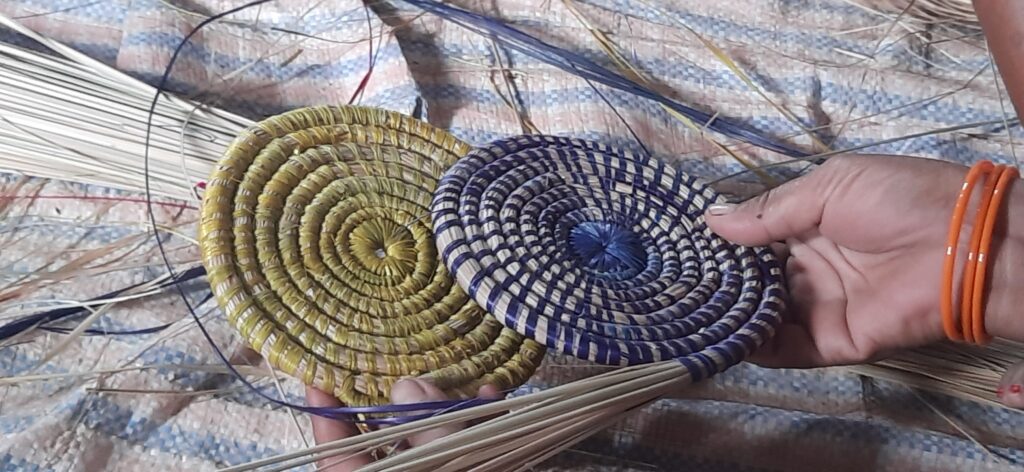
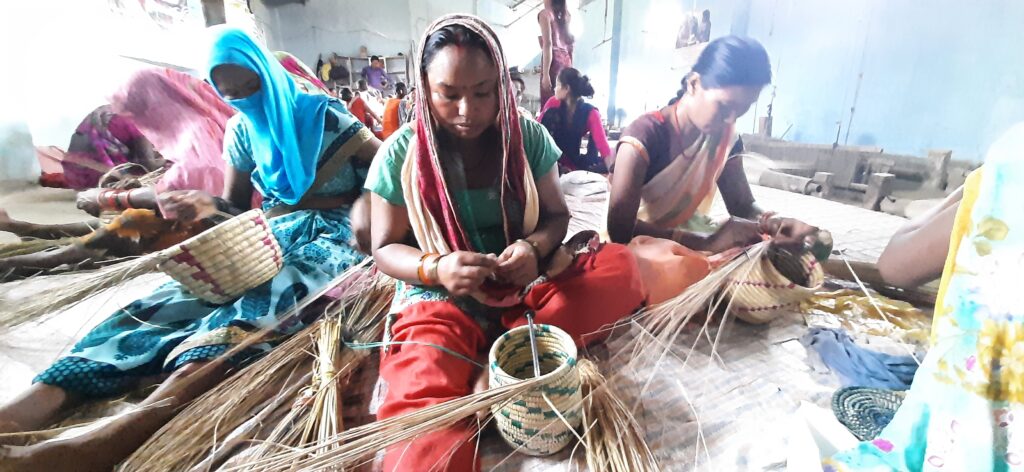
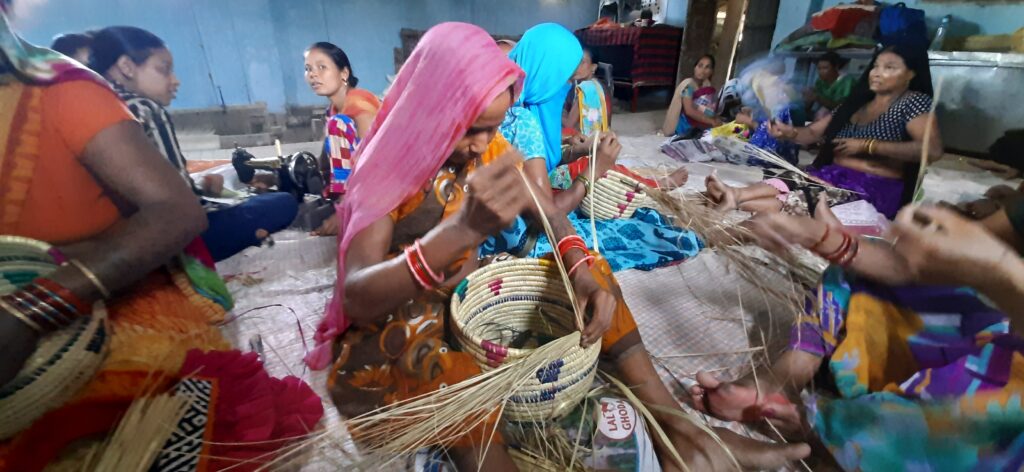
Walk through any village in India today and you will notice something missing — not just the young men who have left for the city, but the quiet hum of hands at work. A woman weaving sikki grass into baskets in the corner of her home. A man sitting under a neem tree, shaping moonj into coils for cots or mats. Children watching, learning. That world did not disappear because people stopped caring. It disappeared because no one made it easy to stay.
7M+ Artisans employed in India’s handicraft sector
$4.56B Handicraft market size in 2024
56% Female artisans — a majority of the workforce
6.39% Projected CAGR of India’s handicraft market 2025–2033
Two pillars, one foundation
Agriculture and craft have always been India’s twin grassroots economies — they were never meant to operate separately. In a pre-industrial village, the agricultural off-season was not idle time. It was craft time. Farmers would weave, carve, embroider, and build using whatever grew around them — bamboo from the edge of the field, moonj and sikki grass from wetland edges, clay from the riverbank. This was not a hobby. It was income security. When the harvest was good, people sold grain. When it wasn’t, they sold baskets, mats, and earthen pots. The two activities formed a natural hedge against poverty.
“In our past, craft was never separate from agriculture — it was agriculture’s off-season partner. Together they gave rural India a financial dignity that neither could provide alone.”
Over the decades, this complementary system quietly collapsed. Cheap industrial goods undercut handmade alternatives. Government schemes focused almost entirely on agriculture — irrigation, fertilizers, price support — while craft was treated as a cultural relic rather than an economic strategy. Rural households, left with only farming as a livelihood, found their incomes shrinking and their options narrowing. And so they made the most rational decision available to them: they left.
The migration math doesn’t add up
India’s rural-to-urban migration has accelerated steadily. Between 2001 and 2011 alone, the number of people migrating for work from rural to urban areas grew at nearly 2.8% every year. Estimates suggest that around 5 million people move out of rural India annually, with about 3 million heading to cities. The reasons are entirely predictable: urban jobs offer wages two to three times higher than comparable rural work, and — critically — the income arrives every month, not just at harvest.
₹40,928
Urban per capita income (annual, 2015–16)
₹98,435
Agriculture’s share of GDP
~18%
Agriculture’s share of workforce
~45%
That gap tells you everything. Agriculture employs nearly 45% of India’s workforce but contributes only around 18% of GDP. The sector supports 70% of India’s population but generates less than half the national net domestic product. When you put that many people into an engine this underpowered, the result is not poverty by accident — it is poverty by design. And migration is simply people responding rationally to that design.
But migration creates its own crisis at both ends. Villages lose their working-age population, leaving behind the elderly, children, and women who are then expected to manage farms and households alone. Cities, meanwhile, absorb far more people than their infrastructure can handle — straining housing, transport, water, and sanitation systems. The imbalance in village life and city life that results is not a development puzzle. It is the predictable consequence of abandoning a diversified rural economy in favor of monoculture dependence on farming.
The untapped potential of craft
Here is what is remarkable: India’s handicraft sector, even in its current neglected state, is a $4.56 billion market growing at over 6% annually. The country has 744 handicraft clusters employing over 212,000 artisans and producing more than 35,000 distinct products. In 2023–24, India exported handicrafts worth ₹32,758 crore. The United States alone absorbs about a third of all Indian handicraft exports, and the goods reach over a hundred countries. The global handicraft market itself stands at over a trillion dollars — and India’s share in it remains below 2%. That gap is not a sign of failure. It is a sign of potential.
What makes craft so powerful as a development tool is its structure. It is labor-intensive, which means growth in the sector creates jobs directly — not through a long supply chain. It uses local materials, so value stays in the community. It requires low capital investment, making it accessible to people without land or savings. And it is inherently sustainable — sikki grass, moonj, bamboo, and clay are renewable, biodegradable, and locally available. In a world increasingly anxious about its environmental footprint, Indian craft is not just economically viable; it is economically fashionable.
“The global handicraft market is worth over a trillion dollars. India’s share is below 2%. That is not a failure story — that is a roadmap.”
What the government has done — and where it falls short
Credit where it is due: the government has not been entirely absent. The One District One Product (ODOP) initiative, which aims to identify, brand, and promote a signature product from each of India’s 761 districts, is exactly the kind of structural thinking the sector needs. Under this initiative, 1,102 products have now been identified across the country. The scheme has produced genuine wins — UP’s moonj craft exports have grown, Bhatinda’s honey production jumped 37% in a single year, and ODOP products were showcased at the World Economic Forum in Davos.
But a scheme is only as good as its implementation, and this is where the story gets uncomfortable. Research on the ground consistently shows that awareness of ODOP among the manufacturers it is meant to serve remains at medium levels at best. Access to financial support — credit linkages, in particular — remains inadequate in aspirational districts. Market linkages, both forward and backward, are still weak. And the most honest critique is one that ground-level observers raise repeatedly: the benefits of these schemes tend to flow toward those who are already connected — people close to government officers, people who know how to navigate paperwork, people who already have enough to weather the waiting. The artisan sitting in a village in Jharkhand weaving a sikki basket has almost certainly never heard of ODOP.
<20%
Handicraft production in unorganized sector (2022)
~70%
Export rejection rates in some categories
15–20%
What real reform would look like
Fixing this is not a matter of launching new schemes — it is a matter of making existing ones actually work for the people at the bottom. A few things matter most.
First, marketing is not a last step — it is the whole point. An artisan can make the most beautiful moonj basket in the world, and it means nothing if there is no buyer. The government needs to invest heavily in creating market linkages: tying craft clusters directly to e-commerce platforms, design firms, export houses, and tourism infrastructure. The model already exists in small pockets — platforms like Etsy list over 30,000 Indian handicraft products, and domestic platforms like Craftsvilla and Jaypore have built real consumer bases. The state’s job is to bring more artisans into these channels, not to build competing platforms that then sit unused.
Second, financial inclusion for artisans must be treated with the same urgency as farm loan waivers. A small artisan cannot scale production without working capital. The current credit system is not designed for people with no collateral and no formal business registration. Microfinance tailored to craft producers — with seasonal flexibility, group lending, and linkage to raw material suppliers — can change this.
Third, quality and design support must reach the village, not just the cluster headquarters. Less than 20% of India’s 7 million artisans have regular access to design training, technology, or market intelligence. Export rejection rates in some handicraft categories run as high as 15–20%. This is not a problem of artisan skill — these are people who have mastered techniques passed down across generations. It is a problem of support systems. Mobile design workshops, regional design institutes, and partnerships with craft schools can bridge this gap.
Finally, the ODOP scheme and similar initiatives need transparent, community-level implementation monitoring. It is not enough to report that products have been identified in 761 districts. The question is: how many artisans in those districts know about it, have applied, have received support, and have seen their incomes rise? That data needs to be public, district by district, so that civil society, journalists, and citizens can hold implementors accountable — not just at the level of policy design, but at the level of actual delivery.
The stakes are bigger than craft
This is ultimately not a story about baskets and mats. It is a story about what kind of economy India wants to build. A country where growth concentrates in a handful of megacities while villages slowly empty out is not a success story — it is a social crisis in slow motion. The craft sector offers a rare opportunity to create income and dignity in the places where most Indians actually live, using resources that are already there, and reviving skills that have survived centuries of neglect.
India has shown it can build world-class digital infrastructure, a sophisticated space program, and a booming startup ecosystem. It can surely figure out how to get a moonj weaver in Prayagraj paid fairly for her work. The question is whether that weaver is treated as a priority or an afterthought.
“The craft sector offers income and dignity in the places where most Indians live — using resources already there, and skills that have survived centuries.”
Data sources: Ministry of Textiles, Export Promotion Council for Handicrafts (EPCH), World Bank, IMARC Group, IndiaSpend, National Sample Survey Organisation (NSSO), and academic research on ODOP implementation.