
India’s craft heritage represents a deep relationship between culture, community, and livelihood. Among the many traditional crafts that symbolize this relationship, Kolhapuri chappals stand out as a powerful example of indigenous design, craftsmanship, and economic sustenance. Originating from the region of Kolhapur in Maharashtra, these handcrafted leather sandals are not just footwear—they represent history, identity, and a sustainable design tradition that has supported artisan communities for centuries.
Today, Kolhapuri chappals hold significant social, cultural, and economic value within India’s craft ecosystem and contribute meaningfully to the country’s creative economy.
Historical Origin of Kolhapuri Chappals
Kolhapuri chappals have a history dating back to the 12th–13th century, when they were crafted by leather artisan communities across Maharashtra and neighboring regions. These chappals became popular during the reign of the Maratha rulers and later gained recognition through the patronage of Shahu Maharaj, the ruler of Kolhapur, who encouraged local artisans and traditional industries.
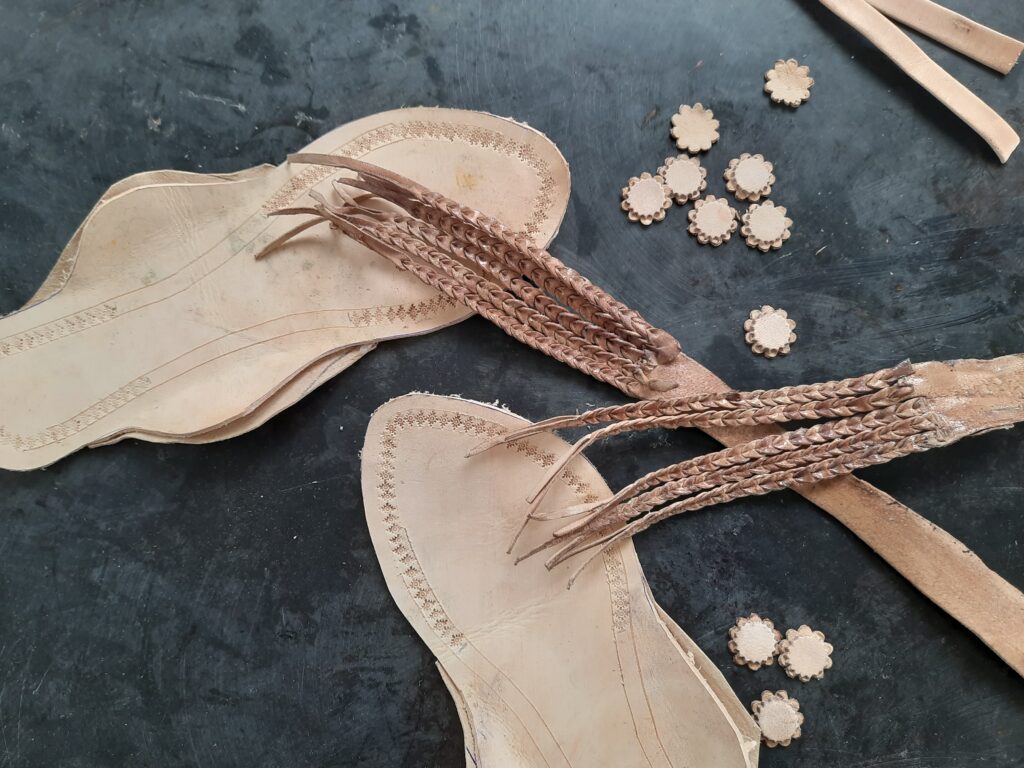
Traditionally, Kolhapuri chappals were handmade using vegetable-tanned leather, natural dyes, and intricate hand-braiding techniques. Each pair was designed to be durable, breathable, and suitable for the hot climatic conditions of western India.
The craft eventually spread across regions such as:
- Kolhapur
- Sangli
- Satara
- Solapur
- Belagavi in Karnataka
Over time, Kolhapuri chappals became an important identity of regional craftsmanship.
Kolhapuri Chappals as a Symbol of Indian Design Heritage
From a design perspective, Kolhapuri chappals represent functional, sustainable, and human-centered design long before these ideas became global design trends.
1. Craft-Based Design System
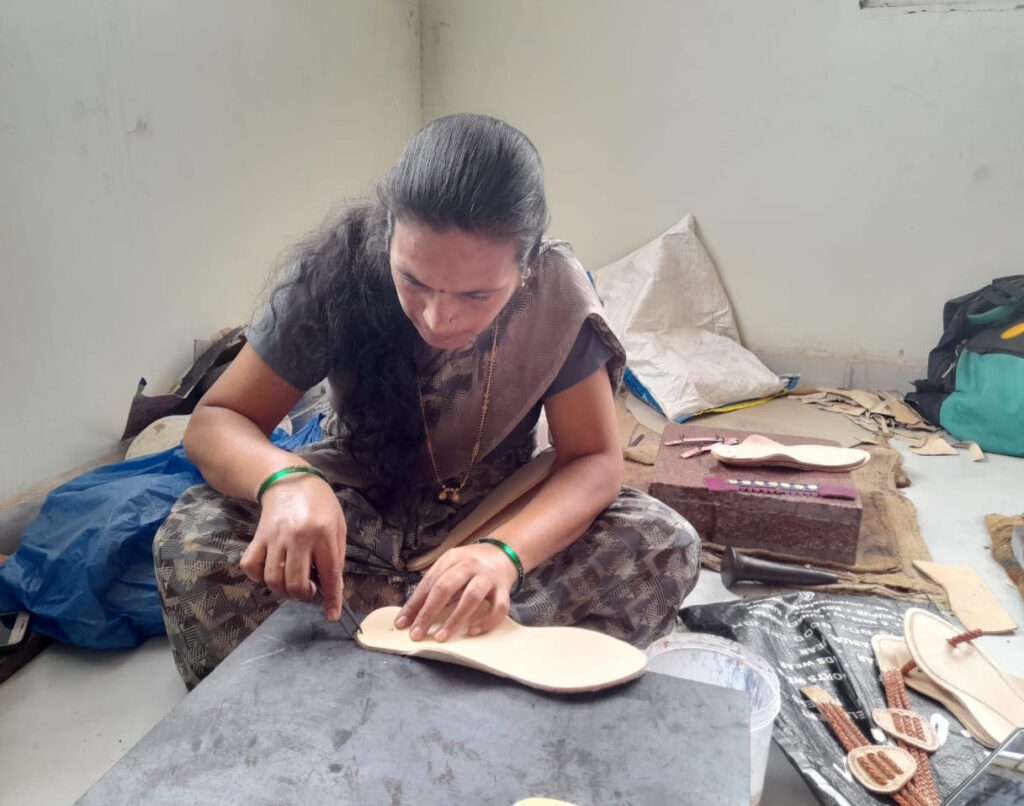
The design of Kolhapuri chappals follows a systematic craft methodology:
- Hand-cut leather patterns
- Braided straps
- Hand stitching with leather cords
- Natural finishing techniques
This process reflects slow design principles, emphasizing quality, longevity, and minimal environmental impact.
2. Ergonomic and Climate Responsive Design
Kolhapuri chappals are designed keeping local climate and lifestyle in mind. The open structure allows ventilation, making them comfortable in warm climates. The natural leather sole gradually adapts to the shape of the wearer’s feet, offering personalized comfort.
3. Design Variations
Over the years, artisans have developed multiple styles such as:
- Kachkadi
- Paytaan
- Bakkal Nali
- Pukari
These variations demonstrate the adaptability of traditional design within evolving fashion contexts.
Social Relevance: Craft Communities and Identity
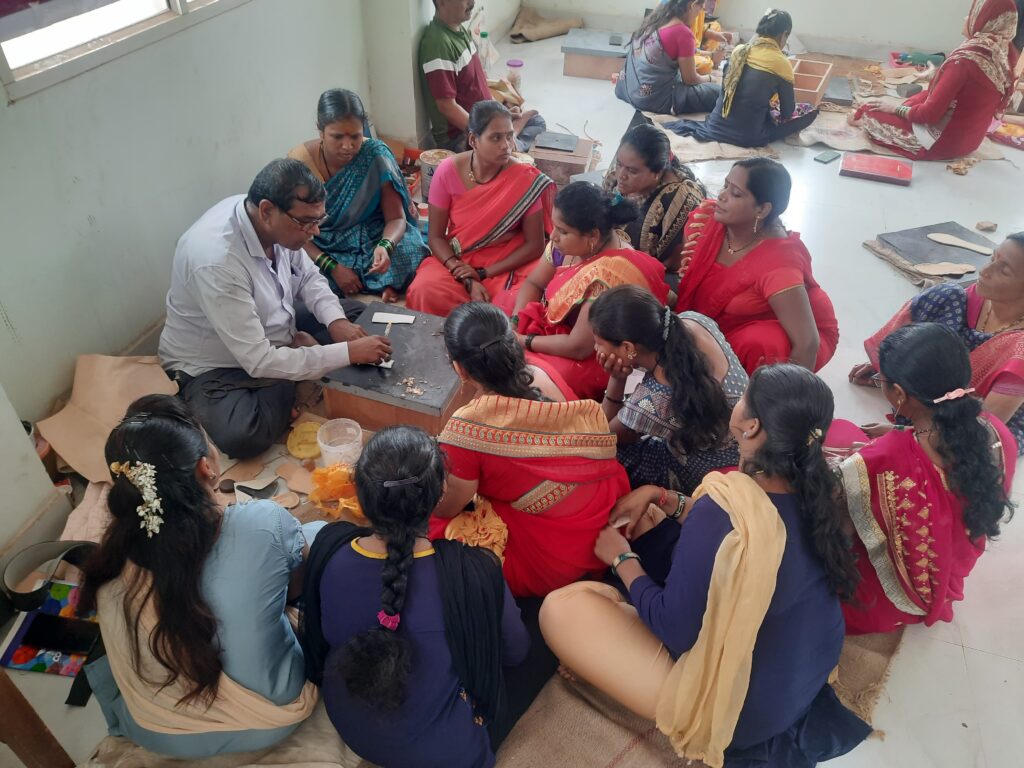
Kolhapuri chappals play an important role in sustaining the livelihoods of thousands of artisan families. The craft is primarily practiced by traditional leather-working communities who pass down their skills from generation to generation.
The craft ecosystem includes:
- Leather processors
- Pattern cutters
- Strap makers
- Stitching artisans
- Market traders
This cluster-based production system helps preserve local knowledge and traditional skills.
Beyond livelihood, Kolhapuri chappals also represent regional identity and cultural pride. In rural Maharashtra and Karnataka, they are still worn during festivals, traditional ceremonies, and daily life.
Cultural Significance in Indian Fashion
Kolhapuri chappals have evolved from rural footwear into a fashion statement in contemporary India.
They are widely used in:
- Traditional Indian clothing
- Ethnic fashion styling
- Festival and wedding attire
- Casual lifestyle fashion
Designers across India have incorporated Kolhapuri elements into modern fashion collections. Luxury and lifestyle brands have also experimented with fusion designs, combining traditional Kolhapuri craftsmanship with modern materials and silhouettes.
In recent years, Kolhapuri chappals have appeared in:
- Fashion runways
- Celebrity styling
- Global lifestyle markets
This transformation highlights the craft’s ability to adapt to contemporary design trends while preserving heritage.
Economic Importance in India’s Craft Economy
India’s handicraft sector employs millions of artisans, making it one of the largest decentralized industries in the country. Kolhapuri chappals form an important segment of this ecosystem.
1. Employment Generation
The Kolhapuri chappal industry provides livelihood to thousands of artisans across Maharashtra and Karnataka, particularly in rural craft clusters.
Because the craft requires skilled handwork rather than large machinery, it supports small-scale production units and home-based workshops.
2. Export Potential
Kolhapuri chappals have strong global appeal due to:
- Authentic craftsmanship
- Sustainable materials
- Handmade value
They are exported to markets such as:
- Europe
- United States
- Middle East
- Japan
International consumers increasingly value handcrafted and ethical products, making Kolhapuri chappals attractive in the global market.
3. Geographical Indication (GI) Protection
Kolhapuri chappals received Geographical Indication (GI) status in 2019, protecting the authenticity of the craft and ensuring recognition for the artisans of the region.
The GI status covers artisan clusters across:
- Maharashtra
- Karnataka
This recognition strengthens the craft’s market value and prevents imitation products from misusing the name.
Kolhapuri Chappals and Sustainable Design
In the era of fast fashion, Kolhapuri chappals represent an alternative model of sustainable fashion and ethical production.
Key sustainability aspects include:
- Vegetable-tanned leather
- Minimal industrial processing
- Long product life cycle
- Repairability and reuse
- Handmade production with low carbon footprint
These attributes align strongly with modern global movements promoting slow fashion and responsible design.
Challenges Facing the Kolhapuri Chappal Industry
Despite their cultural and economic importance, the craft faces several challenges:
1. Competition from Machine-Made Footwear
Cheap factory-produced sandals often imitate Kolhapuri designs, affecting artisan livelihoods.
2. Declining Artisan Interest
Younger generations in artisan families sometimes move away from the craft due to lower income compared to urban jobs.
3. Lack of Branding and Marketing
Many artisans rely on intermediaries who capture most of the profit margins.
4. Limited Design Innovation
Without exposure to contemporary fashion markets, some craft clusters struggle to adapt designs to modern consumer preferences.
Opportunities Through Design Innovation
Design intervention can play a crucial role in revitalizing the Kolhapuri chappal industry.
Opportunities include:
- Contemporary design adaptations
- New materials and color variations
- Global fashion collaborations
- E-commerce and direct-to-consumer models
- Craft tourism initiatives
Design schools, craft organizations, and entrepreneurs can collaborate with artisans to create innovation while preserving tradition.
Kolhapuri Chappals in the Future of India’s Creative Economy
India’s creative industries—fashion, crafts, design, and cultural tourism—are becoming increasingly important to national economic growth.
Kolhapuri chappals represent a powerful example of how traditional craft can integrate with modern design and global markets.
By supporting artisan communities, encouraging design innovation, and strengthening branding, Kolhapuri chappals can contribute significantly to:
- Rural economic development
- Sustainable fashion industry
- Preservation of cultural heritage